What Is the Great Migration — And Why Does Everyone Get It Wrong?
Most people picture a single dramatic moment. A postcard. A National Geographic cover shot.
The truth is richer, messier, and far more extraordinary than any single image.
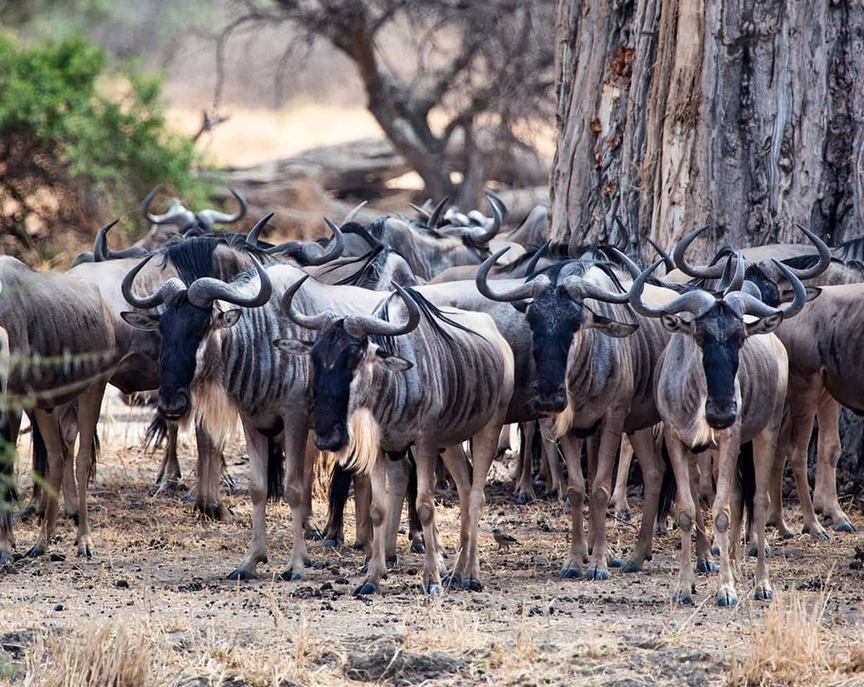
The Great Migration is the world's largest overland animal movement — over 1.5 million wildebeest, 400,000 zebra, and 200,000 gazelle completing a continuous 1,800 km loop between Tanzania's Serengeti and Kenya's Masai Mara. It never stops. There is no start. There is no finish. There is only the eternal, instinct-driven search for grass and water.
And at the heart of it — the moment that makes grown adults cry behind their binoculars — is the Mara River crossing.
The Mara River Crossing: Nature's Most Brutal Spectacle
Here's what happens.
The herds build on the riverbank for hours, sometimes days. Thousands of wildebeest packed together, lowing, jostling, moving forward then retreating. The river below is fast. Murky. And full of Nile crocodiles that haven't eaten in weeks.
Then one wildebeest jumps.
And suddenly — chaos. Thousands of animals hurtle into the water in a single roaring wave. Crocodiles explode from the surface. Dust and spray fill the air. The noise is primal, overwhelming, unlike anything you have heard outside the wild.
Some make it. Some don't.
What you feel watching this isn't sadness exactly. It's awe. A reminder of how ancient and indifferent and astonishing this planet actually is. A reminder that you — with your sunscreen and your camera and your comfortable life — are a very small part of a very large story.
That feeling? That's why people fly 10,000 miles to stand on a riverbank in the Tanzanian heat.
The Perfect Tanzania Safari Doesn't Just Stop at the Migration
Here's the mistake most first-time visitors make: they plan their entire trip around one moment — the river crossing — and miss the astonishing tapestry of experiences that surround it.
Tanzania is not just the Serengeti. It is:
Tarangire National Park — where elephant herds of 50, 80, sometimes 100 animals move beneath ancient baobab trees that look like they were drawn by a child and planted by a god.
Lake Manyara — where flamingos turn the lake pink and lions do something no lion in any other ecosystem does: they climb trees and sleep in the branches, watching the world below.
Ngorongoro Crater — a collapsed volcano the size of a city, sealed off from the outside world, where the Big Five roam in such density that a morning drive can feel like flipping through every page of a wildlife encyclopedia.
The Hadzabe Bushmen of Lake Eyasi — the last true hunter-gatherers of East Africa, living as humans lived 10,000 years ago. Spending a morning with them — watching them track birds with handmade bows, listening to their click language, understanding the depth of knowledge encoded in their way of life — is quietly the most profound experience on the entire itinerary.
Zanzibar — because after eight days of dust roads and 5 AM wake-up calls for game drives, you deserve to put your feet in white sand and watch the Indian Ocean turn orange at sunset.
When to Go: The Migration Calendar Explained
One of the most common questions we get: "When is the best time to see the Great Migration?"
Honest answer: every month offers something extraordinary. But here's the breakdown:
| Period | Location | What You'll See |
|---|---|---|
| January – March | Southern Serengeti | Calving season — thousands of newborn wildebeest every day. Cheetahs, lions, and wild dogs in peak hunting form. |
| May – June | Central Serengeti | Massive herds consolidating before the push north. Intense predator action. Fewer tourists. |
| July – October | Northern Serengeti | Peak season. Mara River crossings. Maximum drama. Book at least 12 months ahead. |
| November – December | Eastern Serengeti | The herds begin moving south again. Excellent game viewing, lower prices. |
Our Tanzania Great Migration & Cultural Experience Safari is designed specifically around the July–October window, positioning you at the Mara River for Days 8 and 9 — your best statistical chance of witnessing a crossing.
What 14 Days in Tanzania Actually Looks Like
We're going to be honest with you here, because we think you deserve honesty more than you deserve a sales pitch.
A 14-day Tanzania safari is not a holiday. It is not a beach vacation with some animals in the background.
It is early mornings. 5:30 AM wake-up calls because the golden hour light is worth more than an extra hour of sleep. It is long drives on corrugated dirt roads that rattle your fillings. It is waiting — sometimes hours — at a riverbank for a crossing that may or may not happen that day. It is dust in your hair and binoculars around your neck and a cold Kilimanjaro beer at the end of the day that tastes better than any beer you have ever had.
And it is the single best two weeks most of our guests say they have ever spent on this earth.
Here's what the full journey looks like:
- Day 1 — Arrive Arusha. Rest. Breathe.
- Days 2–3 — Tarangire & Lake Manyara game drives
- Day 4 — Hadzabe Bushmen & Datoga cultural experience, Lake Eyasi
- Day 5 — Leisure day in Karatu (you'll need it)
- Day 6 — Full-day Ngorongoro Crater safari
- Days 7–9 — Serengeti: Central → Northern → Mara River
- Day 10 — Return south, transfer to Karatu
- Day 11 — Kilimanjaro cultural experience, Moshi
- Day 12 — Domestic flight to Zanzibar
- Days 13–14 — Zanzibar: spice tour, Stone Town, beach, dhow sunset
- Day 15 — Departure
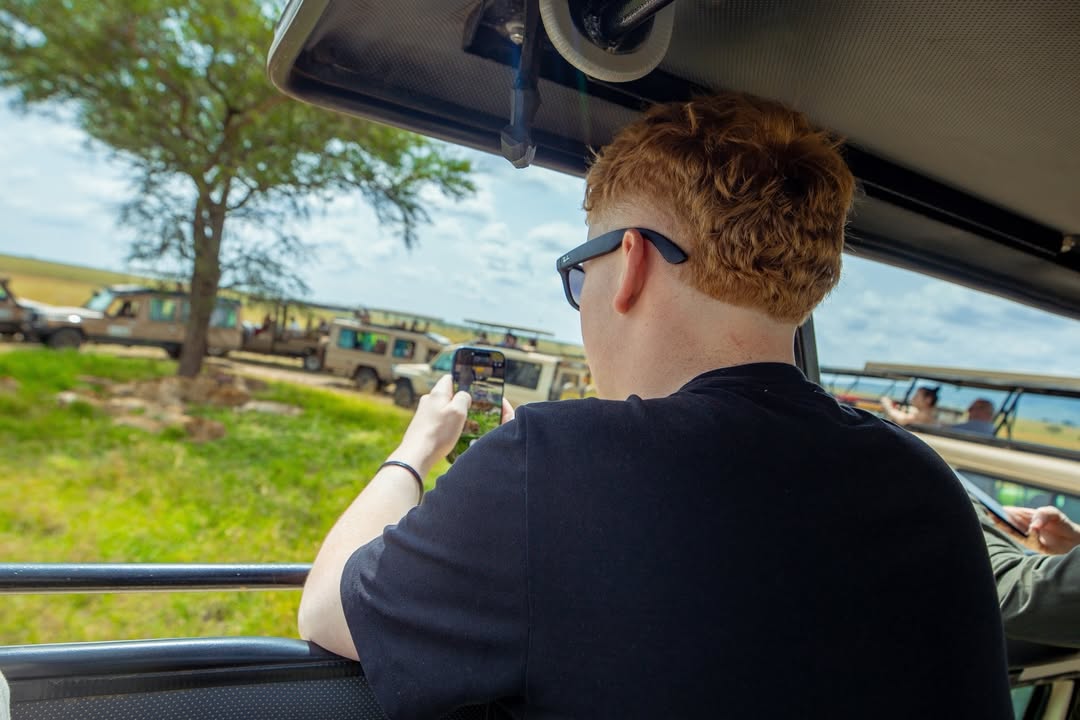
All aboard a private 4×4 Land Cruiser with a pop-up roof, driven by a professional guide who has spent years reading the Serengeti like a map — knowing where the cheetah hunts in the morning, where the lions rest at noon, where to be at 4 PM when the light turns golden and the elephants come to drink.
The Question Nobody Wants to Ask: How Much Does a Tanzania Safari Cost?
Let's talk about it openly.
A quality Tanzania safari is an investment. It is not a budget trip. But it is also not the inaccessible luxury experience some operators would have you believe.
Our 2027 Tanzania Great Migration & Cultural Experience is priced as follows:
Mid-Range:
- 4 guests: from $5,800 per person
- 6 guests: from $5,200 per person
- 8 guests: from $4,900 per person
Luxury:
- 4 guests: from $8,500 per person
- 6 guests: from $7,800 per person
- 8 guests: from $7,200 per person
Everything included: accommodation, meals, park fees, cultural activities, domestic flight to Zanzibar, all game drives in a private vehicle, and a professional guide for the entire journey.
Everything excluded: your international flight, visa ($50 for most nationalities), travel insurance, and tips.
Here's the thing about price. The people who come back to us after this trip — and many do come back — never say they wish they'd spent less. They say they wish they'd come sooner.
Why Travel With Us?
We could list our credentials. We could tell you about our years in the industry, our carefully vetted accommodation partners, our guides who know every corner of the Serengeti by name.
But here's what we'd rather tell you:
We are a Tanzania-based team. This is not a package assembled in an office in London or New York from a brochure. We drive these roads. We know these camps. We have relationships with the Hadzabe community that go back years. When something changes — a road, a migration pattern, a camp under renovation — we know first.
And when you're standing at the Mara River at 7 AM and the herds are building on the opposite bank, your guide will know exactly where to position your vehicle. Because they've done it before. And they know what you came here to see.
Ready to Start Planning?
The 2027 safari season is filling. The Northern Serengeti camps during peak migration (July–October) are among the most sought-after accommodations in Africa, and serious travellers book 12–18 months in advance.
If this is the year you stop saying "one day I'll do an African safari" and start saying "this is the year" — we'd love to talk.
Enquire now and receive a custom 2027 itinerary within 48 hours.
No commitment. No hard sell. Just an honest conversation about the trip of a lifetime.